
Founder, You’re All-In on Tech. Stop Buying More.
Ask a tech founder what they own and they’ll name their shares, some Nasdaq stocks, maybe a little crypto. They’ll leave out their biggest asset: themselves.
This is called human capital, meaning the value today of everything you’ll earn in the future. For a young person it’s most of their wealth. At 25, almost all of what you’re worth is future income, and it slowly turns into savings by retirement.
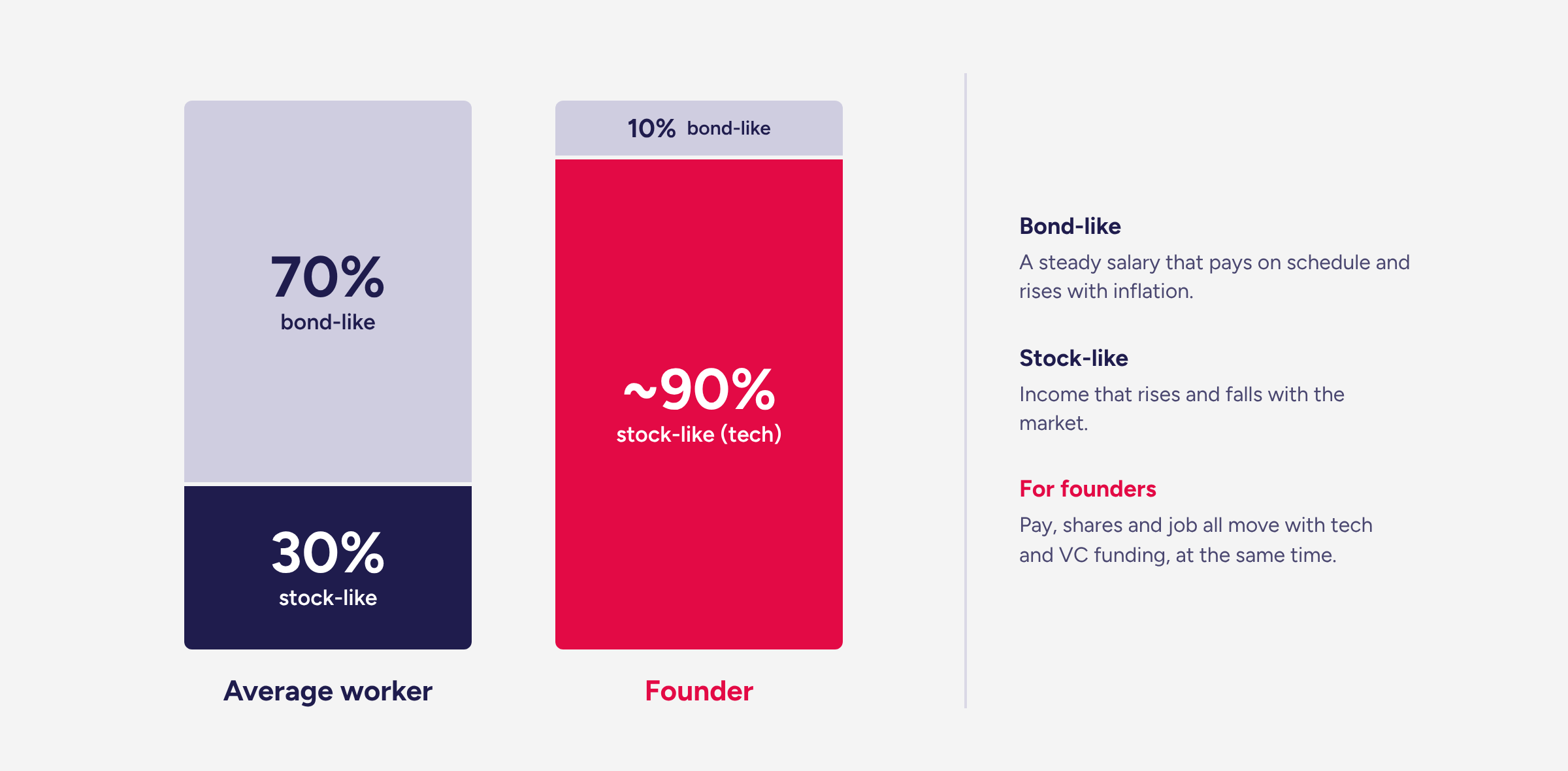
Studies find that for the average worker, human capital is about 30% like a stock and 70% like a bond. A steady salary acts like a bond because it pays on a regular schedule and usually rises with inflation. That’s why retirement funds hold mostly stocks for young savers and move into bonds as they get older.
Founders are not the average worker
Your income goes up and down with your startup, and your startup goes up and down with the tech market and the VC funding mood. When tech stocks fall, funding dries up, your valuation drops and your salary gets cut, all at the same time. Your human capital acts almost entirely like a tech stock.
So when a founder puts their savings into tech stocks too, they’re doubling a bet they’ve already made. I see this pattern a lot. Picture a couple who both work at the same company and also keep most of their savings in its shares. If the company has a bad year, their jobs and their savings get hit together. The answer is to diversify.
Don’t buy what you already are
The fix is to look at your whole balance sheet, not only your brokerage account. Here’s an example I like. A professor in London has a very secure job and owns a house in the city. Once her job and her house are counted, her best savings portfolio holds no UK stocks and no UK bonds. Her life already gives her plenty of UK exposure.
The same logic applies to a founder: your career is already your tech position, so your savings should hold something else.
Where the efficient frontier fits in
The efficient frontier is a curve of the best investment mixes: the highest return for each level of risk. Your comfort with risk decides where you sit on it.
Most founders draw it using only their savings, choose a “moderate” point and feel safe. But your job and startup shares are large, tied to tech and hard to sell, so your real position sits far out on the risky end. Count your career as a holding you can’t sell and the best mix for your savings changes: toward bonds, other sectors, other countries and real assets. Owning things that don’t fall when tech falls is what brings you back to a balanced position.
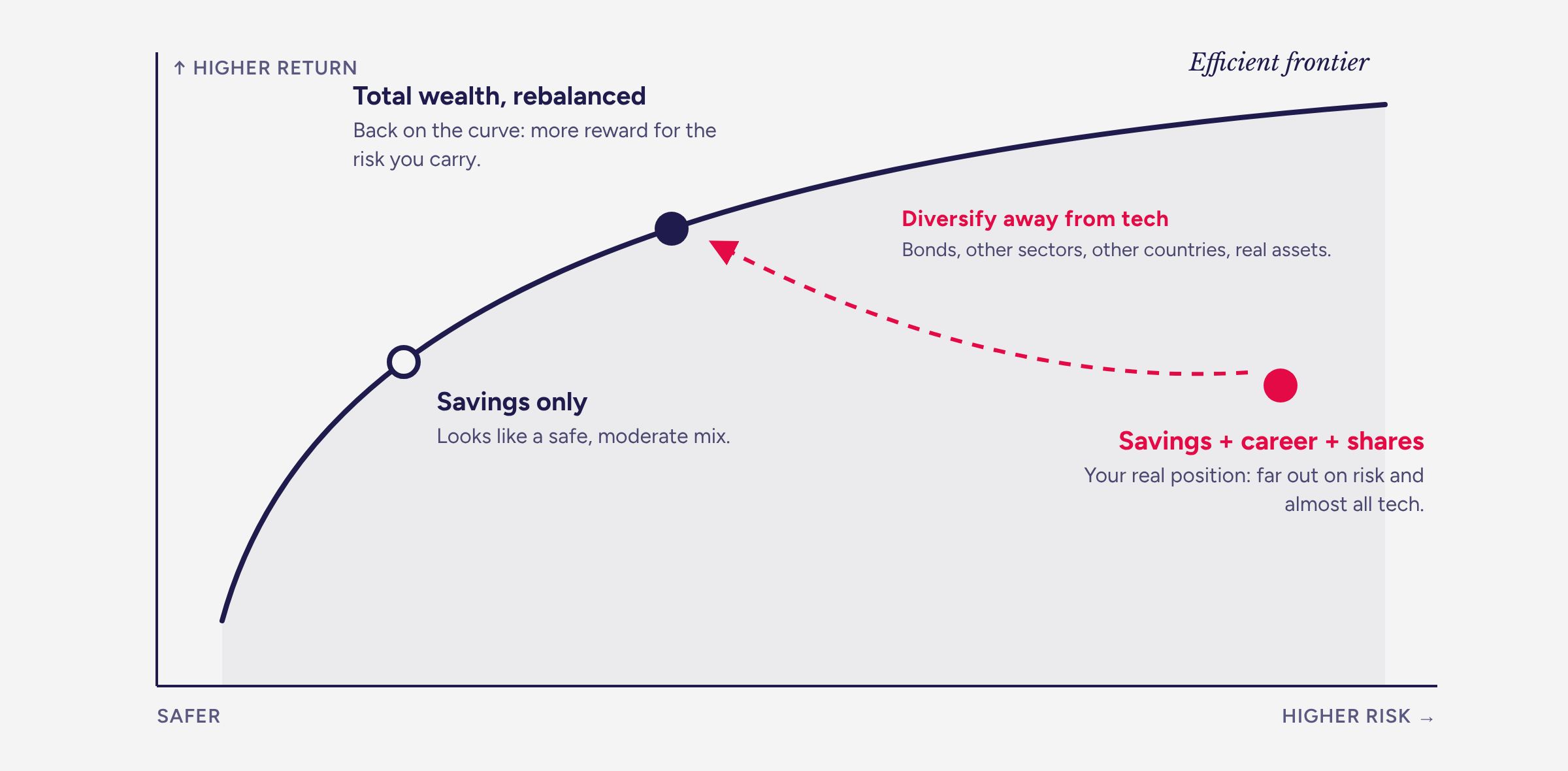
When a founder counts only their savings, their portfolio looks moderate. Once you add their career and startup shares, they sit far out on the risk side and mostly in tech. Putting savings into non-tech assets brings their total wealth back onto the efficient frontier.
How to build your own frontier
Ask an adviser for a “total wealth” allocation that counts your job and startup shares.
Do it yourself: in Portfolio Visualizer’s free tool, use the Nasdaq-100 to stand in for your career and shares, lock it at its share of your wealth, and let the tool choose the rest.
Rule of thumb: if your career and shares are over half your wealth, keep tech stocks in your savings small.
Last five steps for founders
List everything you own: cash, investments, home, startup shares, and the value of your future income.
Label what each one really is. Is it stock-like or bond-like? Is it tied to tech or not? For most founders, the job and the shares both count as tech stock.
Choose a risk level for your total wealth, not just for your savings account.
Use your savings to fill the gaps. Your career is already a big tech bet, so lean toward bonds, non-tech sectors, other countries and real assets.
Review at big moments. After a funding round, a share sale or an exit, part of your human capital turns into cash, and your mix should change with it.
Bottom line: your biggest risk position doesn’t appear in any brokerage account. The popular rule says to hold 120 minus your age in stocks, so at 30 that’s 90%. But that rule assumes a steady salary that acts like a bond. A founder’s income doesn’t, so the rule needs a founder version: start lower, around 100 minus your age, and keep tech out of that stock portion. Your savings should balance you, not copy you.
