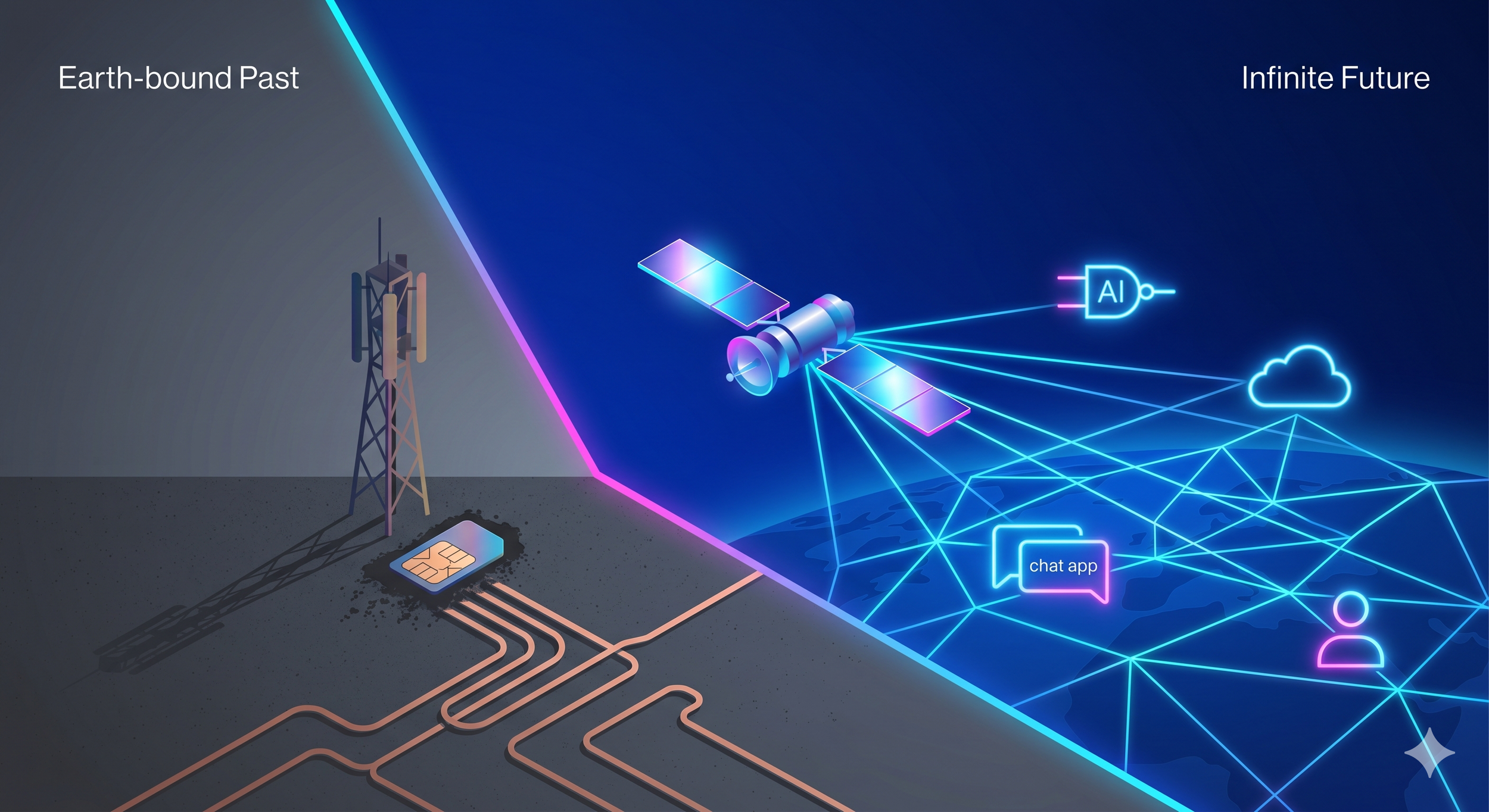
SpaceTech + AI = The New Unbundling of Telecom
Telecom Has Been Reinvented Before
Telecom has never been a stable industry. It has been reinvented in waves since the telephone was patented in 1876. First came wired voice networks. Then mobile phones untethered communication from place. Then the internet turned communication into software, shifting power away from carriers and toward apps, operating systems, and platforms.
The first major disruption happened at the interface layer. Chat apps may have started with messaging, but they did not stop there. Over time, they expanded into voice calls, video calls, media sharing, group coordination, business communication, payments in some markets, and broader communication ecosystems.
Traditional telecom companies still owned much of the infrastructure, but they no longer fully owned the customer relationship. The experience moved to software. The phone number and the SIM card started to matter less than the data connectivity, the app, the identity layer, and the network around the conversation. That was not the end of telecom. It was only one wave of its unbundling.
This Week’s Reminder: The Next Wave Is Coming From Space
Amazon’s planned $11.57 billion acquisition of Globalstar is not just another space-tech headline. It is a signal that the next reinvention of telecom is moving into orbit. The deal gives Amazon access to Globalstar’s satellite network, spectrum portfolio, and direct-to-device capabilities, strengthening Amazon Leo as a challenger to SpaceX’s Starlink. Amazon says it expects direct-to-device services to begin in 2028, while Starlink is already far ahead in scale, with more than 10,000 satellites and about 9 million users.
This matters because telecom is now being attacked from both ends. Software already took the communication experience. Space is now coming for coverage itself.
The Telecom Stack Is Being Split Apart
The old telecom model bundled everything together: connectivity, identity, billing, voice, messaging, and coverage. The new model is separating those layers into different businesses.
One layer is becoming the connectivity utility. That is where Starlink and Amazon are heading. They may become the ISPs of the future, providing resilient, global, increasingly direct-to-device connectivity from space.
Another layer is becoming the communication experience. That is where WhatsApp, Signal, Telegram, FaceTime, Messenger, X Chat, and newer AI-native products like nmbr AI live. These are no longer just messaging apps. They are becoming communication and relationship-intelligence platforms people actually use for texting, calling, sharing, coordinating, and increasingly living large parts of their digital relationships, even if a traditional carrier still sits somewhere underneath.
In other words, the telecom company of the future may not look like a telecom company at all. It may look like a satellite network in orbit, a communication platform on your phone, and an AI assistant quietly managing your communications in the background.
AI May Reinvent the Industry Again
If apps disrupted telecom once, AI may do it again.
The next communication layer may not just help people send messages or place calls. It may screen who gets through, summarize context before you reply, suggest what to say, execute tasks on your behalf, follow up automatically, coordinate across channels, and turn communication into a more intelligent workflow.
This is where agentic AI starts to matter. Tools like OpenClaw are already showing what this future could look like: an AI assistant that can live inside channels people already use such as Discord and other messaging and calling apps, while also taking actions across email, calendars, and other systems.
That is the deeper shift. Legacy telecom operators were built to connect endpoints and bill usage. Large language models and agentic systems are built to understand intent, maintain context, reason across tools, and increasingly take action. Telcos were built for transmission. AI-native tools are built for orchestration.
That distinction matters. A traditional telecom operator can carry your voice. An AI-based system can decide whether the message should become a call, a reply, a calendar event, a reminder, a summary, or a task for another agent. That is not just better telecom. That is a different category altogether.
Final Thought
Telecom is not a mature industry. It is just in between disruptions.
The first wave moved communication from wires to mobile. The second moved it from carriers to software. The next may move it from towers to satellites, and in parallel, from passive interfaces to AI-native communication systems.
The old telecom giants connected people. The next generation may connect people, software, satellites, and AI agents all at once.