
The Great Selection
In venture and institutional finance, we often talk about 'moats,' but we rarely talk about the ground those moats are dug into. As the industry matures, the most critical decision for any stakeholder isn't which feature to build, but which foundation to settle on.
Selecting your infrastructure today is the ultimate long-term bet on where you believe the center of gravity for global liquidity will reside in 2046.The blockchain experiment phase is officially over. We’ve moved into the Infrastructure Selection phase.
Banks and institutions have stopped asking if this works and started picking which rail they want to live on for the next twenty years. Right now, the market is splitting into three distinct camps:
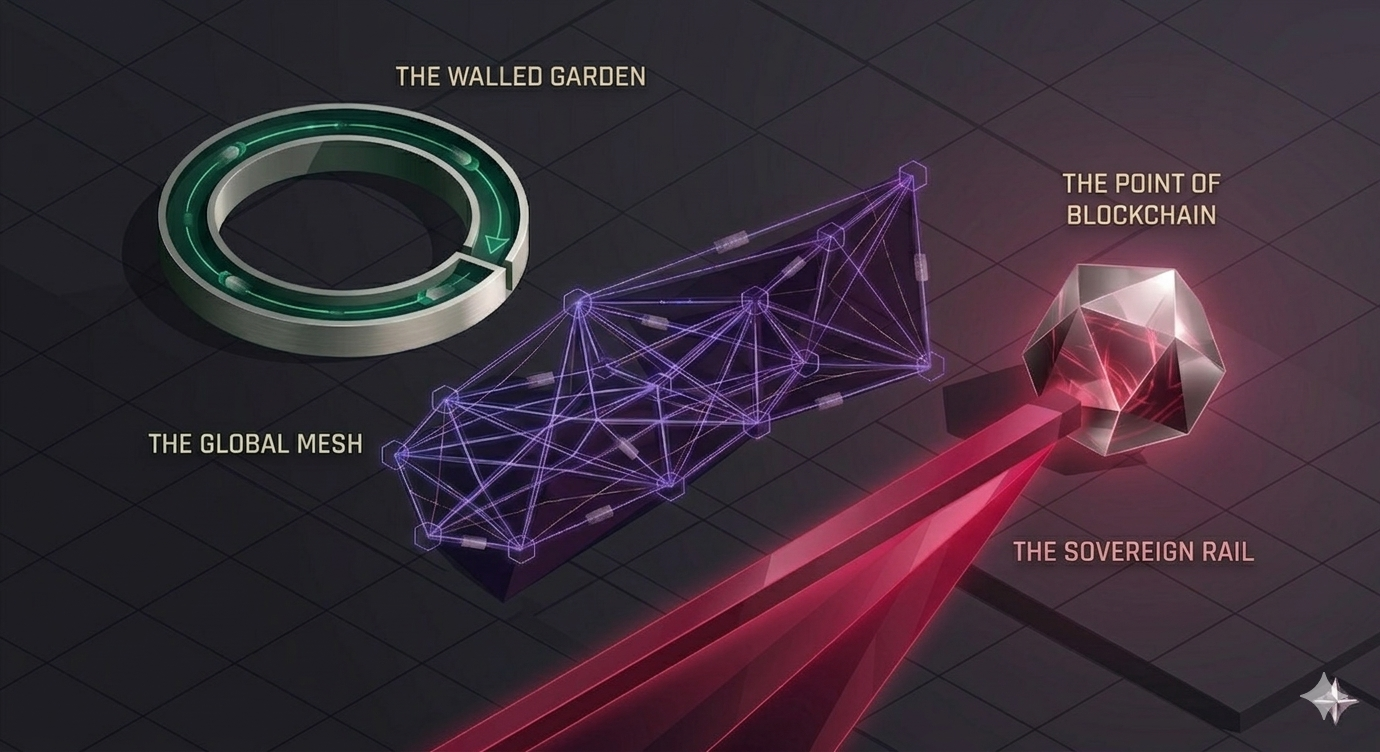
1. The Walled Garden (The Fortress): Think J.P. Morgan’s Kinexys. It’s private, permissioned, and highly efficient for internal settlement. It’s the safe bet for control, but it keeps you trapped in a single bank’s ecosystem.
2. The Global Mesh (The Connector): This is the Goldman Sachs play with the Canton Network. It’s a network of networks that keeps data private but lets different banks talk to each other. They’ve even plugged in LayerZero to bridge these institutional assets into the $100B+ liquidity pools of public decentralized chains.
3. The Sovereign Rail (The Anchor): This is where Omlah sits for us. Being Saudi-centric isn't just about "buying local." It’s a strategic choice to build a compliant, local vault that speaks SAMA’s language from the first line of code, rather than renting a global standard.
My two cents: We’ve reached a crossroads. You can be a tenant on a global mesh or an architect of a sovereign rail. But let’s be honest: both options are essentially building "better silos." They move us further away from the permissionless, borderless core of blockchain. We are choosing between a global landlord or a local fortress. If neither looks like the "original" blockchain, how do you choose the one that actually serves your 20-year vision?
Written by Alyaqootah Khaled