

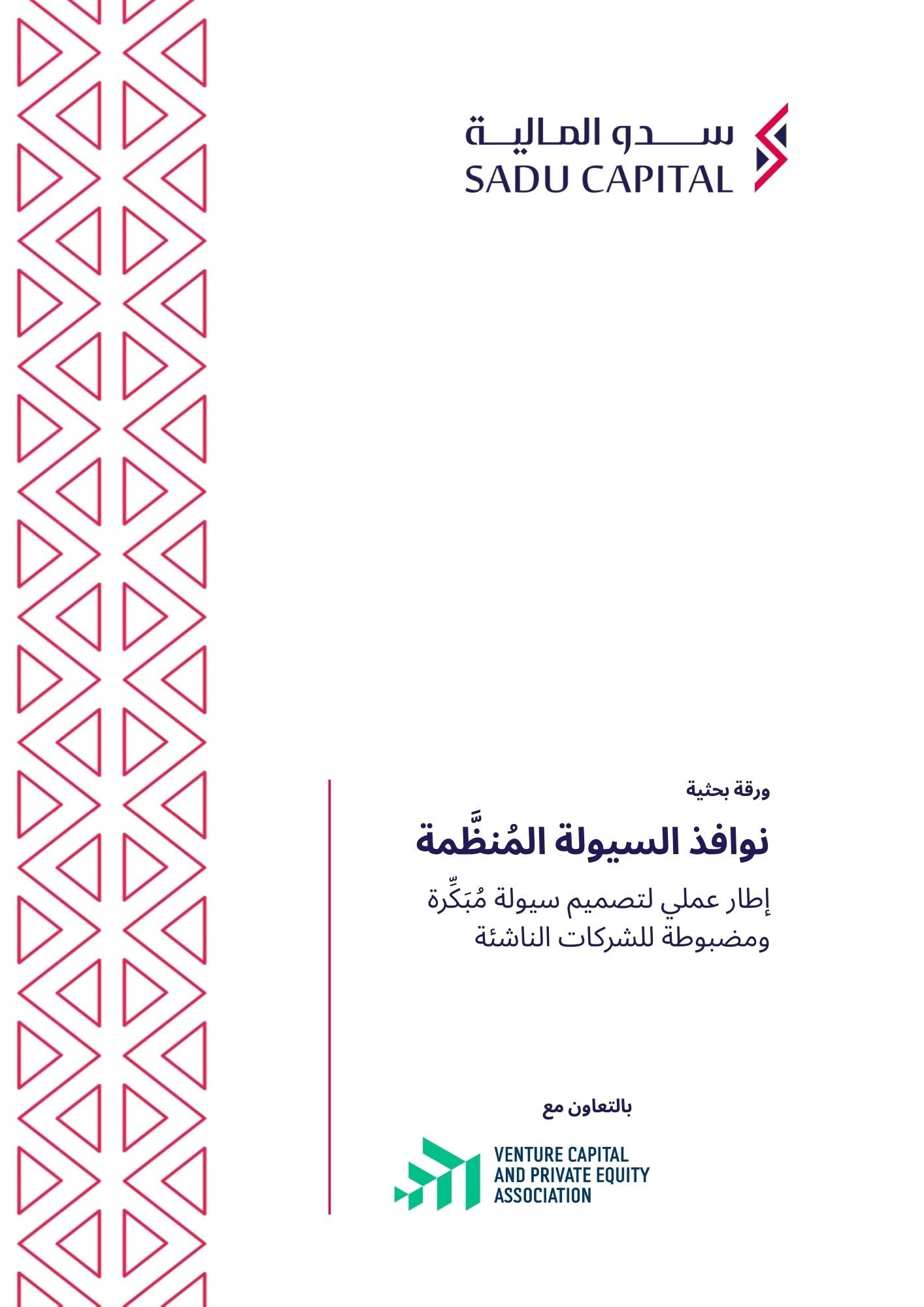
Structured Liquidity Windows:
A Strategic Approach To Pre-Exit Liquidity For Startups
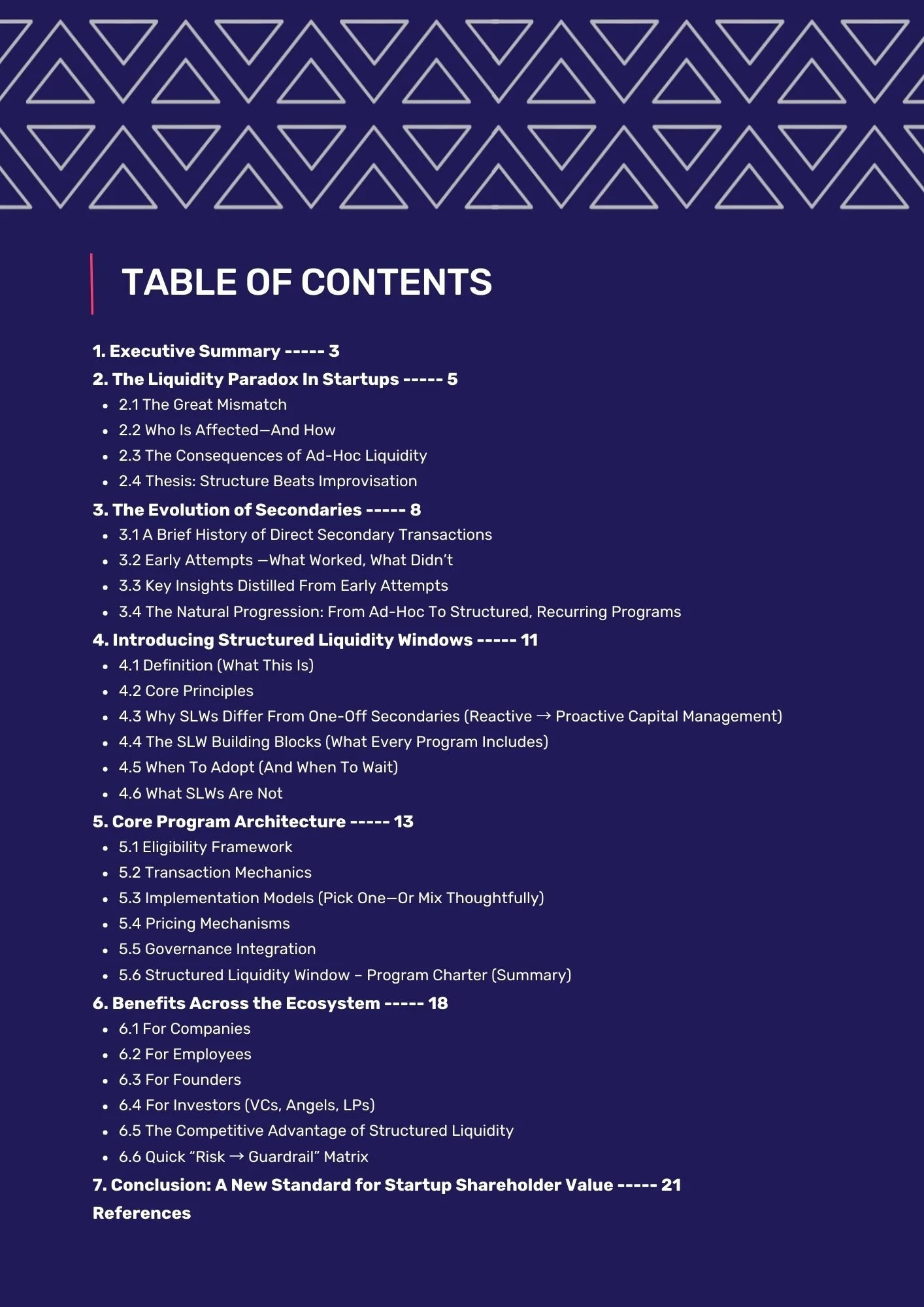
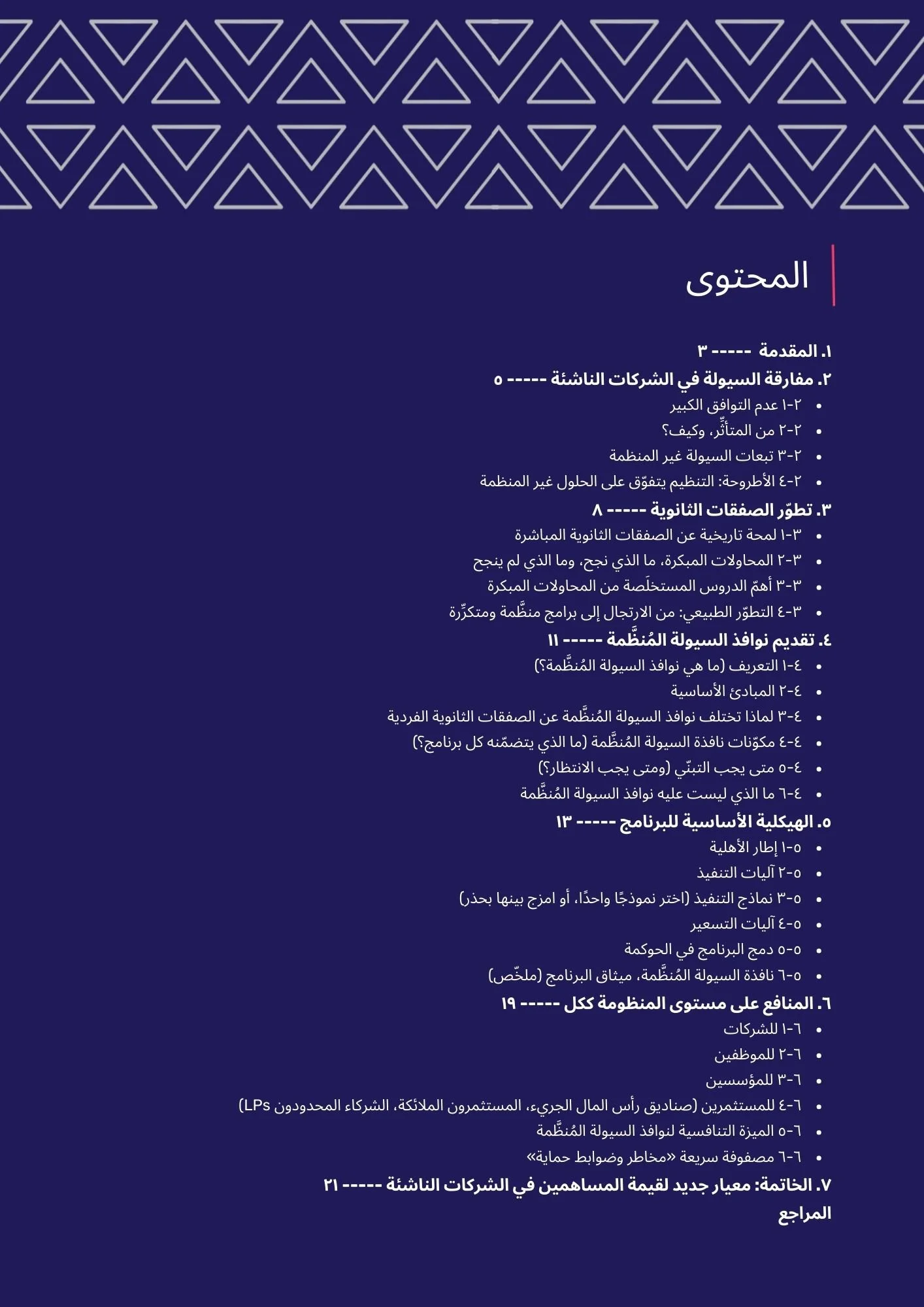
Download The White Paper Now
A white paper exploring how periodic, controlled liquidity programs can unlock value for startup employees and investors, while preserving company control and growth trajectory.
By Ahmad Takatkah, Partner @ Sadu Capital, Dec 15, 2025. Published by Saudi Venture Capital & Private Equity Association (VCPEA), Saudi Arabia.
Executive Summary
Startups are creating unprecedented paper wealth, more than $5.2 trillion locked in private companies globally, and yet the people building that value often can’t touch it for years.
IPOs are sporadic. M&A is lumpy. Ad-hoc secondaries are messy, opaque, and unfair. This is the Liquidity Paradox: record enterprise value with limited, unpredictable access to cash for founders, employees, and early investors. The result? Talent attrition, misaligned incentives, and portfolio pacing headaches for VCs and LPs.
This white paper proposes a simple, powerful answer: Structured Liquidity Windows (SLWs): issuer-led, periodic programs that allow systematic, partial liquidity under a board-approved policy. SLWs decouple liquidity from exit timing while preserving governance, fairness, and cap-table hygiene.
Why This Matters—Now
For companies: Make equity feel real. Retain top performers, recruit faster, control price & shareholder composition, reduce back-channel transfers, and manage the cap table deliberately—not by rumor or one-off side deals.
For employees: Fund life events, reduce stress, and stay focused—without leaving the mission. The average startup employee waits 11.5 years for liquidity; SLWs cut that to predictable 12-month cycles.
For founders: Diversify responsibly and extend your decision horizon; optimize for long-term value creation, not exit pressure. Founders who access partial liquidity make better strategic decisions, avoiding premature exits and loss of potential value.
For investors & LPs: Smooth DPI through measured, repeatable tenders; gain cleaner price discovery to inform reserves and pacing. Secondaries funds showed 15.9% median net returns versus 13.2% for traditional primary funds, they also have much lower loss ratios, only 1.4% of secondary funds exhibit TVPI ratios below 1.0x, compared to 22.8% for direct venture investments. The takeaway for primary funds is clear, dynamic portfolio management and access to secondaries improve fund returns.
As argued in this white paper: SLWs are not a luxury. They are a strategic necessity that align stakeholders, protect governance, and let equity work as intended. The companies that implement them now will define the next, more stakeholder-centric chapter of startups and venture capital.
Download White Paper Now

Newsletter
Join our newsletter for exclusive Market Watch insights, podcasts, founder stories, in addition to our thoughts, market maps, and trend analyses.