
Part 3: The Creative Curse (The 1/10 Capital Gap)
In Part 2, we established that Arabic isn't just a language; it’s a high-performance logic kernel, a "3D" system forced to run on the "2D" tracks of English code. But a superior engine is useless if it’s trapped in a garage.
This is the Creative Curse: The structural friction that occurs when a 10/10 Brain meets a 1/10 Ecosystem.
1. The Inertia of the "Standard Gauge"
The global market runs on what engineers call a "Standard Gauge" railway. English isn't just a language; it’s the physical width of the tracks. Every global API, every cloud provider, and every Venture Capital firm in Silicon Valley is hard-coded for the English "Gauge."
When you build an AI model that processes meaning 40% faster because of Arabic root-logic, you hit the Infrastructure Inertia. To get the capital to scale, you are often forced to lobotomize your own tech. Global VCs don't buy "Logic Alpha"; they buy "Standardized Scale."
Most founders give up. They "downclock" their 10/10 brain to a 1/10 clone just to stop the bleeding. They trade their Sovereign Advantage for Global Liquidity.
2. The Autopsy: The "Island" Mistake
We’ve seen this before with projects like Qalb. It was an actual intellectual feat, a functional programming language (based on Lisp) built entirely in an Arabic calligraphic matrix. It proved the logic was superior, but it ignored the Inertia of the world's plumbing.
Because it didn't talk to the "Standard Gauge" (English-centric libraries and compilers), it became a "Logic Fortress" with no bridge to the global 10/10 capital market. It was a brilliant engine with no tracks.
3. The Unexplored Arbitrage: The Bridge is Empty
The multi-billion dollar opportunity isn't in creating another Arabic LLM that mimics ChatGPT. It is in Neural Transcoding. Right now, the market is split between "Language Purists" (building isolated logic) and "Efficiency Mimics" (translating Western models). The "Missing Middle" is the Transcoder: software that allows a developer to think and architect in the high-density modularity of Arabic roots, but deploy and scale in the global "Standard Gauge" of Python or English APIs.
4. The Strategy: The Trojan Engine
To break the curse, we don't build a new railroad. We build a Superior Engine that hacks the Existing Tracks. This is the Trojan Engine Strategy:
The 10/10 Core: You build your internal processing layer using Arabic’s modular, root-based logic. It’s leaner and more token-efficient than the "Thin Logic" of the West.
The 1/10 Shell: You wrap that engine in a sterile, English-standard API.
To an investor in New York, it looks like a standard SaaS tool. But under the hood, it’s running a logic matrix they couldn't possibly build. You aren't "localizing" for them; you are under-pricing them because your engine is fundamentally more efficient.
5. The VC Playbook: Investing in the Interface
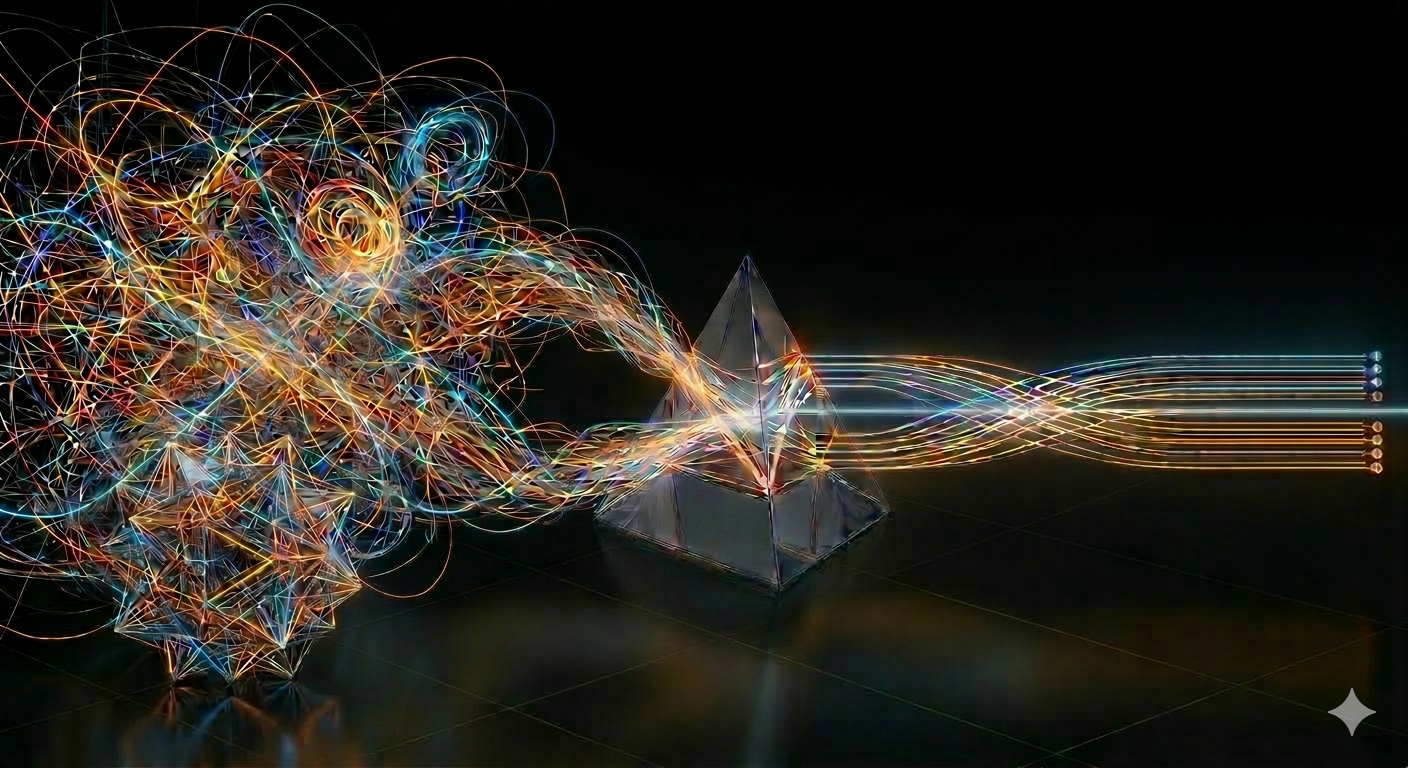
For the investors, the "Reckoning" is about finding the Architects, not the Collectors. The Middleware Layer: The real alpha is in the "Prisms", AI tools that instantly map high-density local logic to global English APIs.
Unit Economic Arbitrage: Look for the startups that look like Western clones but have 30% better margins. That’s where the hidden Arabic kernel is working.
Sovereign Rails: We must back local GPU clouds (Part 1) and regional compilers so we aren't just "renting" the West’s tracks forever.
The Reckoning: Build the Core. Hack the Shell.
The era of being "Art Collectors" of Western tech, importing their models and painting them with local colors, is over.
The next generation of Riyadh-based giants won't be "The Arabic Version of X." They will be the Architects of the Interface. We will keep the 10/10 Brain at the core and use the 1/10 Ecosystem as a vehicle to reach the world.
The series concludes. The bridge is built.
Written by Alyaqootah Khaled