
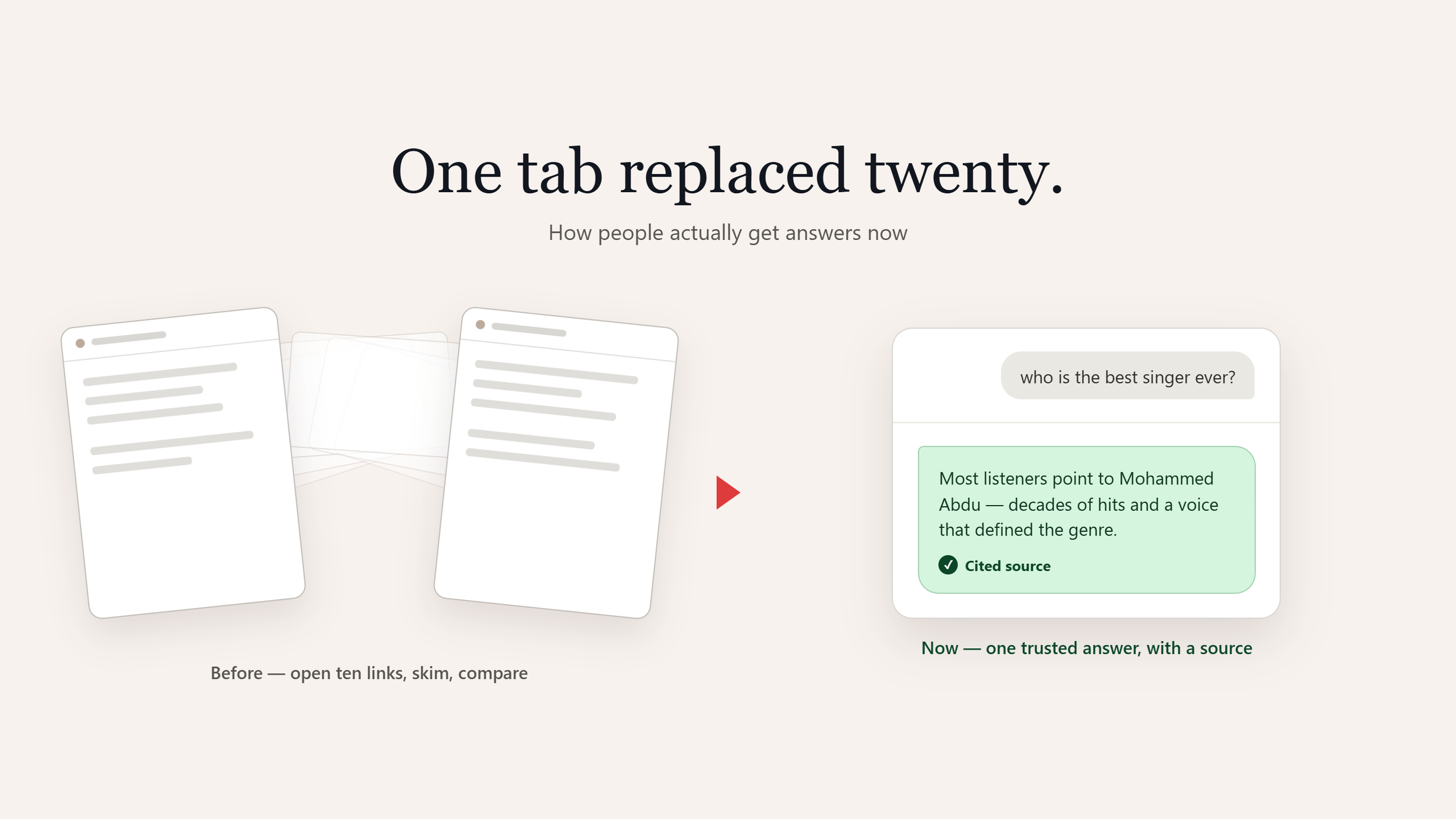
The Joke At Our Sadu Meeting That Made Us Rethink GEO (The Term You'll Be Hearing Everywhere This Year)
A partner joked about a colleague's browser tabs. It changed how we read every GEO company in our pipeline — and what we now ask before investi
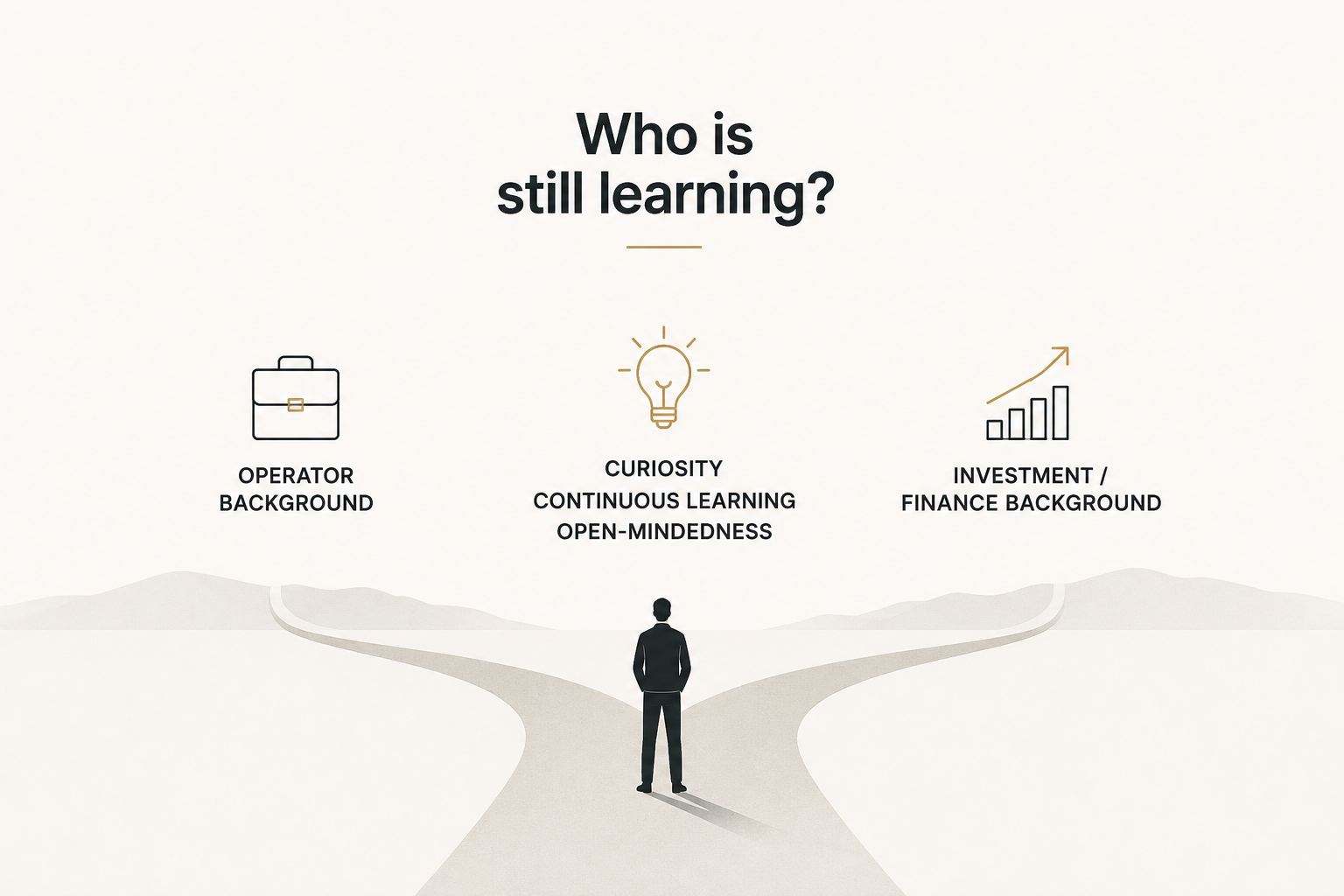

Your Next Customer Is an Agent. Are You Legible to It?
For a decade the moat was the funnel to the human. Now an agent sits in between — and it can't be persuaded, only parsed. A look at why your next customer is a machine, and what it takes to be legible to it.
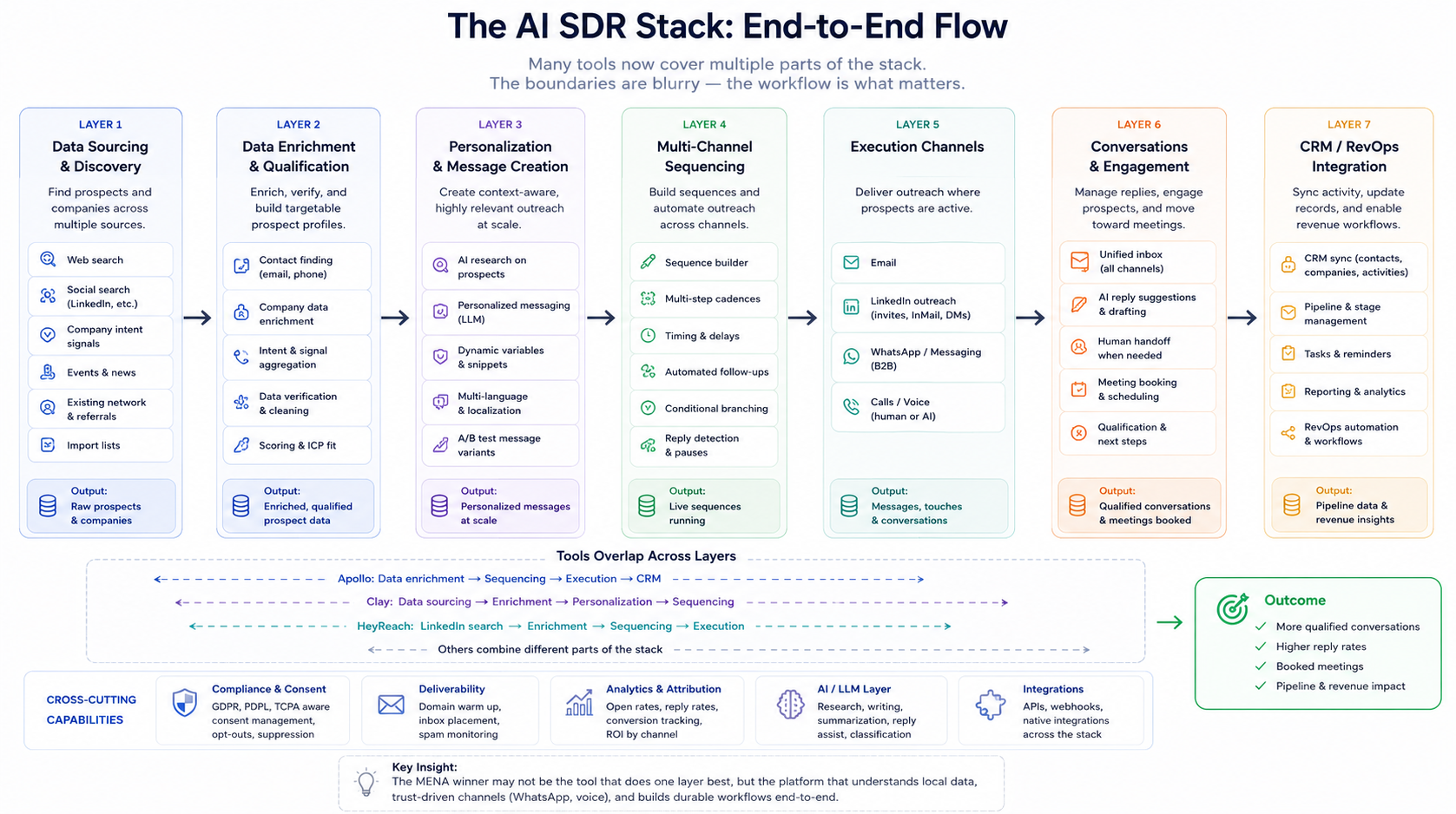
Deep Dive: Mapping the AI SDR Stack — Why the MENA Winner May Not Look Like the US Winner
A VC maps the AI SDR workflow from data sourcing to trusted conversations, and argues that the MENA winner may not look like the US winner. In a region where sales still runs through relationships, WhatsApp, calls, dialects, and data freshness may matter more than automated email volume.

When Policy Becomes Product-Market Fit
I used to dismiss policy-driven investment as artificial. Manufactured demand. Not real. I've changed my mind on that — mostly. Some markets genuinely can't be created by consumers alone, and a government contract isn't always a subsidy. But there's a version of this that goes wrong, and it goes wrong in a very specific way. This is my attempt to draw that line.

The Pacing of Logic
What do metallic watercolors and investment due diligence have in common? More than you think. This essay explores why amateurs fail by rushing "heavy pigment" operations, and how master analysts find true enterprise value by studying the "negative space" hidden behind shiny pitch deck metrics.

The Infrastructure Layer Behind Enterprise Blockchain: The SettleMint Journey
While much of the blockchain industry focused on new applications and digital assets, SettleMint focused on a different challenge: implementation. Founded in 2016, the company set out to reduce the complexity of enterprise blockchain adoption by simplifying development, integration, and deployment. Its journey offers a compelling example of how solving operational bottlenecks, not just creating new technology, can unlock adoption at scale.

VC Firms Need to “Build” Better Products for LPs & Founders: The Fund Is No Longer Enough - Part 1/2
LPs no longer just need access to a fund; they need architecture. As private markets grow more complex, the future of venture capital requires GPs to stop just raising capital and start acting like product managers.

Rewriting Wall Street's Plumbing: How Paxos Spent 14 Years Modernizing Financial Settlement
Tokenization is often discussed through the lens of digital assets, but the movement of those assets is just as important. Paxos spent more than a decade tackling one of finance's most complex problems: settlement. Its path from crypto exchange to regulated clearing agency illustrates how enduring infrastructure businesses are often built long before the market recognizes their value.
It Took 9 Years to Become an "Overnight Success": The Relentless Evolution of Carlos Domingo and Securitize
Tokenization's biggest success stories were not built by putting assets on a blockchain. They were built by solving the infrastructure challenges that prevented institutions from adopting them. Securitize's journey from a niche venture capital project to a key partner for some of the world's largest asset managers demonstrates how trust, compliance, and execution can become powerful competitive advantages.
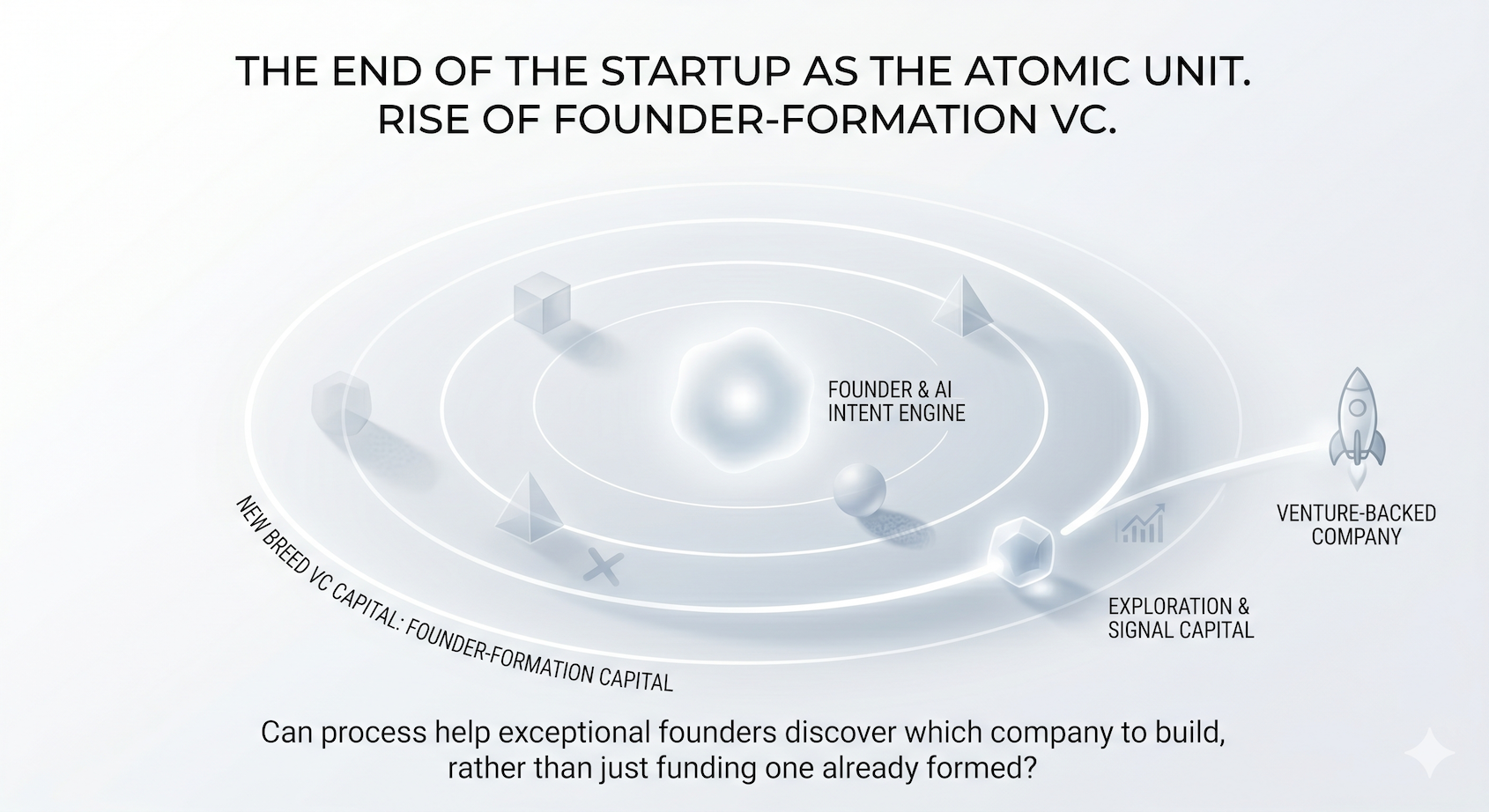
The End of the Startup as the Atomic Unit. The Rise of a New Breed of VCs
For decades, the startup was the atomic unit of venture capital. Maybe in the next era, that assumption starts to break. Maybe the founder, not the startup, becomes the new unit of company formation. And if that happens, a new breed of VC firms may emerge: firms that do not just fund companies after they are formed, but help exceptional founders discover which company deserves to be formed in the first place.
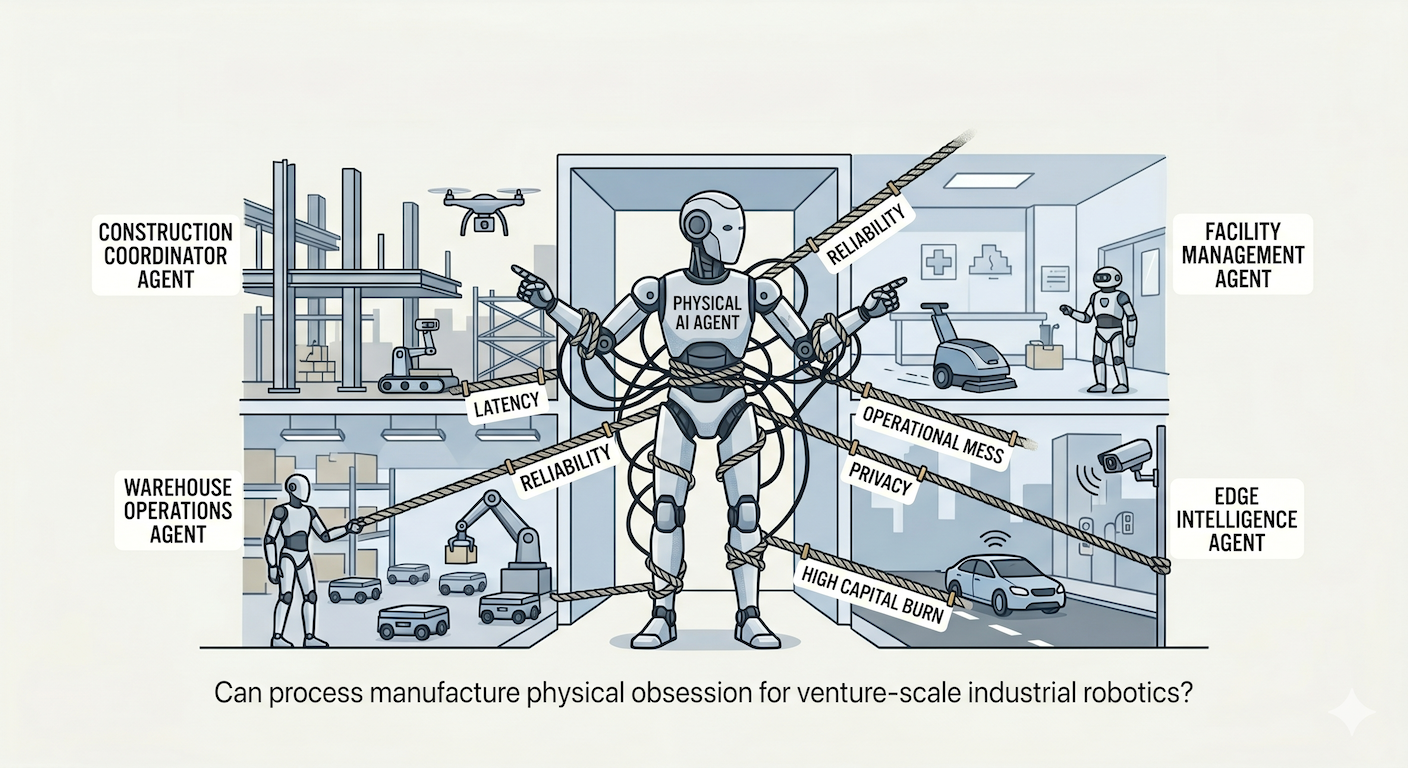
Agentic AI Beyond the Screen: From Software Agents to Physical Agents
I want to take you on a short journey. Not a journey about the AI hype, or the latest model release. This is a journey about a pattern. A pattern that has repeated itself across the history of computing and technology.
Every time technology became more abstract, more connected, and easier to use, it did not simply improve old software. It created entirely new kinds of companies, new markets, and even new human behaviors. And I think we may be standing at one of those moments again.
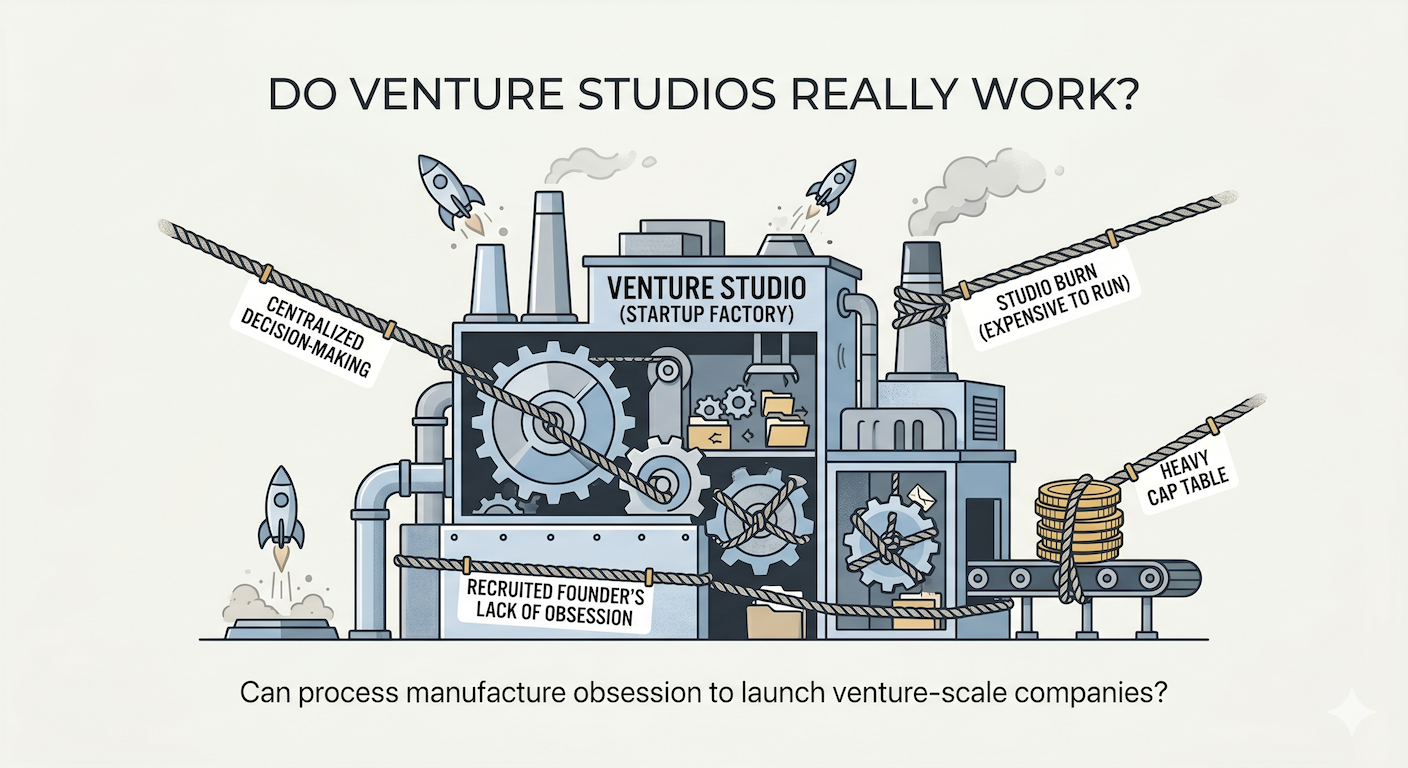
Venture Studios Sound Great. But Do They Really Work?
I like the idea of venture studios. In theory, they make a lot of sense.
It sounds smarter than traditional VC. More structured. More repeatable. Less random. And that is exactly why the model is attractive.
But I am still skeptical, especially when it comes to standalone venture studios. Not because the model can never work. It can. Some studios have produced strong companies. But I think many people underestimate how hard it is to build venture-scale startups this way.

The Studio Problem: Why VCs Usually Say No
The studio model fails when revenue is tied to manual hours. By automating the technical 90% through Character Logic, we shift the director’s role from micro-managing pixels to orchestrating intent. This decoupling is the only path to a truly scalable, tech-enabled creative engine
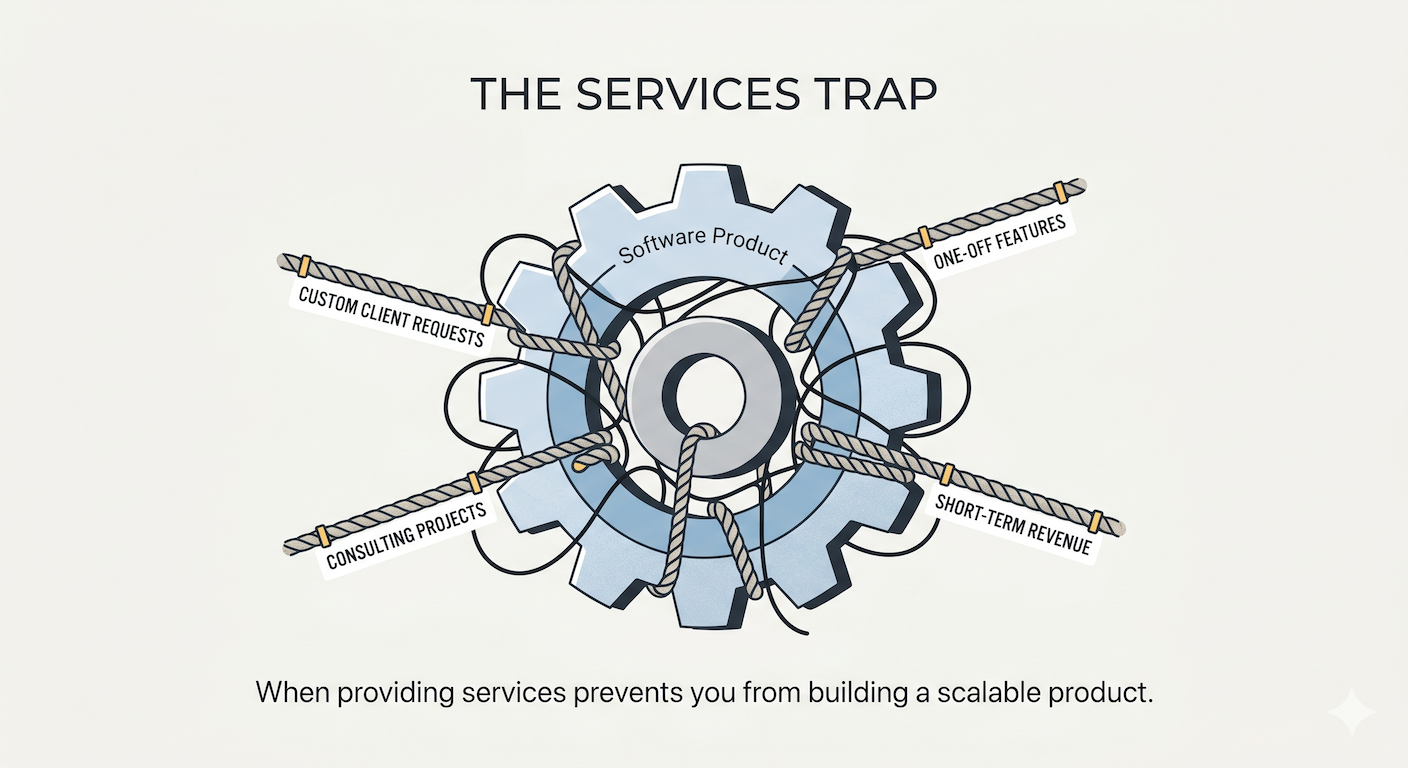
Trap Alert: “We’ll Start as a Service, Then Productize Later”
I’ve heard this pitch from founders many times. And honestly, on the surface, it sounds very reasonable. “We’ll start as a service business, work closely with a few paying clients, really understand the problem, refine the solution, and then turn that into a scalable software product.” In theory, it sounds smart. In practice, sometimes it works. But many times, founders get stuck somewhere in the middle, because the path from services to product is much harder than it sounds when you say it in one sentence.


Execute with Focus. Go Crazy on Vision
One thing I hear often from founders is this:
“VCs always say focus, focus, focus.”
And honestly, I get why that becomes frustrating. Because sometimes “focus” gets repeated so much that it starts to sound like: stay small, stay narrow, do less, dream less, don’t stretch too far, do’t think global!
But that’s not really what investors mean. At least it’s not what I mean.
To me, focus is mostly about execution. But vision? I actually think vision should be much bigger than that

SpaceTech + AI = The New Unbundling of Telecom
Telecom is not a mature industry. It is just in between disruptions.
The first wave moved communication from wires to mobile. The second moved it from carriers to software. The next may move it from towers to satellites, and in parallel, from passive interfaces to AI-native communication systems.
The old telecom giants connected people. The next generation may connect people, software, satellites, and AI agents all at once.

The First-Glance Trap: Building Moats in a Mirror
When a localized model looks identical to a global peer, founders often get 'uptight' about the similarities. But in the race for regional sovereignty, the paint job matters less than the foundation. Discover why surviving the first-meeting X-ray is the key to long-term survival.